Automotive clean product campaign
- 6 shots
- Clean product
- Product only
- Landscape grid
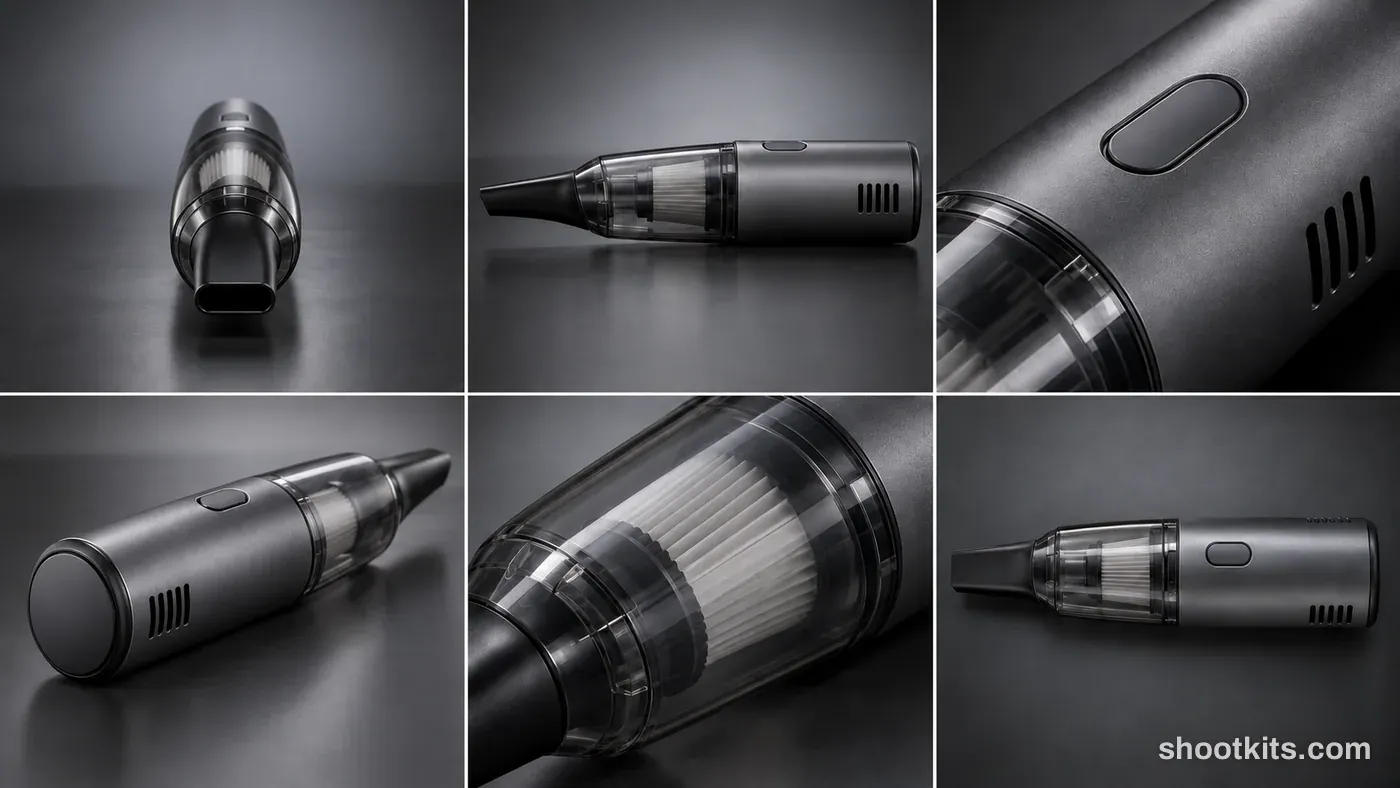
Clear product views can help an automotive accessory seller explain a compact item before showing it in use. This six-panel board suits handheld car vacuums, detailing tools and similar products with visible construction details. Upload your own product photograph in ChatGPT and point out the real nozzle, controls and finish before applying the prompt. Keep one complete view as the lead image, then use the side, rear and close panels to answer practical questions about the design.
Describe your car product in a few words. Still attach your product photo in ChatGPT.
Attach your product photo before you paste the prompt. A plain background and even light give the most accurate result.
Shot list
Want one shot at full size? Open it and copy its prompt on its own.
R1C1Product heroShow the complete hero product in its natural presentation with realistic contact shadow
Create one photorealistic campaign photograph, not a grid. Input: ONLY [PRODUCT REFERENCE / PRODUCT DESCRIPTION]. Campaign route: Clean product. Creative concept: Precise commercial product photography: six viewpoints reveal the accessory or car-care product's form, materials and real features. Example art direction: Graphite seamless studio with a soft top light, crisp rim light and a subtle reflective floor. Example palette: graphite, silver and true product colors. Derive the final colors, casting, styling and set from the supplied product. No separate outfit, model or location input is required. Product-only board. No model or person in any panel. Preserve the product reference's exact design, color, material, geometry, construction, size, packaging and visible branding. Inspect the actual product shape, finish, mounting points, nozzles, labels and packaging; never place the product on a recognizable branded vehicle or show readable car badges or number plates. Adapt any shot involving a pump, cap, cuff, sleeve, strap, container, animal or ingredient to what actually exists; do not invent absent features, accessory products, ingredients, performance claims or internal mechanisms. Example colors and materials are creative cues: substitute the supplied product's true characteristics. Keep skin, fur, hands, fabric behavior, scale, physical contacts, reflections and shadows plausible. No captions, panel numbers, invented logos, watermark or screenshot UI. Shot R1C1: Product hero. Action: Show the complete hero product in its natural presentation with realistic contact shadow. Camera: eye-level front. Framing: product-only full view. Where a subject is present, reuse the campaign's internally generated hero for face, animal and styling continuity. Product-only framing contains no human or animal. Full-body framing includes complete head and feet; full-animal framing includes complete head, tail and paws.R1C2Side formShow a distinct side viewpoint preserving real product geometry
Create one photorealistic campaign photograph, not a grid. Input: ONLY [PRODUCT REFERENCE / PRODUCT DESCRIPTION]. Campaign route: Clean product. Creative concept: Precise commercial product photography: six viewpoints reveal the accessory or car-care product's form, materials and real features. Example art direction: Graphite seamless studio with a soft top light, crisp rim light and a subtle reflective floor. Example palette: graphite, silver and true product colors. Derive the final colors, casting, styling and set from the supplied product. No separate outfit, model or location input is required. Product-only board. No model or person in any panel. Preserve the product reference's exact design, color, material, geometry, construction, size, packaging and visible branding. Inspect the actual product shape, finish, mounting points, nozzles, labels and packaging; never place the product on a recognizable branded vehicle or show readable car badges or number plates. Adapt any shot involving a pump, cap, cuff, sleeve, strap, container, animal or ingredient to what actually exists; do not invent absent features, accessory products, ingredients, performance claims or internal mechanisms. Example colors and materials are creative cues: substitute the supplied product's true characteristics. Keep skin, fur, hands, fabric behavior, scale, physical contacts, reflections and shadows plausible. No captions, panel numbers, invented logos, watermark or screenshot UI. Shot R1C2: Side form. Action: Show a distinct side viewpoint preserving real product geometry. Camera: eye-level side. Framing: product-only full view. Where a subject is present, reuse the campaign's internally generated hero for face, animal and styling continuity. Product-only framing contains no human or animal. Full-body framing includes complete head and feet; full-animal framing includes complete head, tail and paws.R1C3Material detailShow one real material texture and construction detail
Create one photorealistic campaign photograph, not a grid. Input: ONLY [PRODUCT REFERENCE / PRODUCT DESCRIPTION]. Campaign route: Clean product. Creative concept: Precise commercial product photography: six viewpoints reveal the accessory or car-care product's form, materials and real features. Example art direction: Graphite seamless studio with a soft top light, crisp rim light and a subtle reflective floor. Example palette: graphite, silver and true product colors. Derive the final colors, casting, styling and set from the supplied product. No separate outfit, model or location input is required. Product-only board. No model or person in any panel. Preserve the product reference's exact design, color, material, geometry, construction, size, packaging and visible branding. Inspect the actual product shape, finish, mounting points, nozzles, labels and packaging; never place the product on a recognizable branded vehicle or show readable car badges or number plates. Adapt any shot involving a pump, cap, cuff, sleeve, strap, container, animal or ingredient to what actually exists; do not invent absent features, accessory products, ingredients, performance claims or internal mechanisms. Example colors and materials are creative cues: substitute the supplied product's true characteristics. Keep skin, fur, hands, fabric behavior, scale, physical contacts, reflections and shadows plausible. No captions, panel numbers, invented logos, watermark or screenshot UI. Shot R1C3: Material detail. Action: Show one real material texture and construction detail. Camera: raking oblique macro. Framing: product-only macro. Where a subject is present, reuse the campaign's internally generated hero for face, animal and styling continuity. Product-only framing contains no human or animal. Full-body framing includes complete head and feet; full-animal framing includes complete head, tail and paws.R2C1Alternate viewpointRotate the viewpoint to show actual rear or alternate surface, no invented features
Create one photorealistic campaign photograph, not a grid. Input: ONLY [PRODUCT REFERENCE / PRODUCT DESCRIPTION]. Campaign route: Clean product. Creative concept: Precise commercial product photography: six viewpoints reveal the accessory or car-care product's form, materials and real features. Example art direction: Graphite seamless studio with a soft top light, crisp rim light and a subtle reflective floor. Example palette: graphite, silver and true product colors. Derive the final colors, casting, styling and set from the supplied product. No separate outfit, model or location input is required. Product-only board. No model or person in any panel. Preserve the product reference's exact design, color, material, geometry, construction, size, packaging and visible branding. Inspect the actual product shape, finish, mounting points, nozzles, labels and packaging; never place the product on a recognizable branded vehicle or show readable car badges or number plates. Adapt any shot involving a pump, cap, cuff, sleeve, strap, container, animal or ingredient to what actually exists; do not invent absent features, accessory products, ingredients, performance claims or internal mechanisms. Example colors and materials are creative cues: substitute the supplied product's true characteristics. Keep skin, fur, hands, fabric behavior, scale, physical contacts, reflections and shadows plausible. No captions, panel numbers, invented logos, watermark or screenshot UI. Shot R2C1: Alternate viewpoint. Action: Rotate the viewpoint to show actual rear or alternate surface, no invented features. Camera: slightly high rear three-quarter. Framing: product-only full view. Where a subject is present, reuse the campaign's internally generated hero for face, animal and styling continuity. Product-only framing contains no human or animal. Full-body framing includes complete head and feet; full-animal framing includes complete head, tail and paws.R2C2Feature close-upShow a genuine visible feature, closure, rim or construction point
Create one photorealistic campaign photograph, not a grid. Input: ONLY [PRODUCT REFERENCE / PRODUCT DESCRIPTION]. Campaign route: Clean product. Creative concept: Precise commercial product photography: six viewpoints reveal the accessory or car-care product's form, materials and real features. Example art direction: Graphite seamless studio with a soft top light, crisp rim light and a subtle reflective floor. Example palette: graphite, silver and true product colors. Derive the final colors, casting, styling and set from the supplied product. No separate outfit, model or location input is required. Product-only board. No model or person in any panel. Preserve the product reference's exact design, color, material, geometry, construction, size, packaging and visible branding. Inspect the actual product shape, finish, mounting points, nozzles, labels and packaging; never place the product on a recognizable branded vehicle or show readable car badges or number plates. Adapt any shot involving a pump, cap, cuff, sleeve, strap, container, animal or ingredient to what actually exists; do not invent absent features, accessory products, ingredients, performance claims or internal mechanisms. Example colors and materials are creative cues: substitute the supplied product's true characteristics. Keep skin, fur, hands, fabric behavior, scale, physical contacts, reflections and shadows plausible. No captions, panel numbers, invented logos, watermark or screenshot UI. Shot R2C2: Feature close-up. Action: Show a genuine visible feature, closure, rim or construction point. Camera: oblique macro. Framing: product-only close-up. Where a subject is present, reuse the campaign's internally generated hero for face, animal and styling continuity. Product-only framing contains no human or animal. Full-body framing includes complete head and feet; full-animal framing includes complete head, tail and paws.R2C3Top-down arrangementArrange the same complete product neatly from above without adding extra copies or unsupported accessories
Create one photorealistic campaign photograph, not a grid. Input: ONLY [PRODUCT REFERENCE / PRODUCT DESCRIPTION]. Campaign route: Clean product. Creative concept: Precise commercial product photography: six viewpoints reveal the accessory or car-care product's form, materials and real features. Example art direction: Graphite seamless studio with a soft top light, crisp rim light and a subtle reflective floor. Example palette: graphite, silver and true product colors. Derive the final colors, casting, styling and set from the supplied product. No separate outfit, model or location input is required. Product-only board. No model or person in any panel. Preserve the product reference's exact design, color, material, geometry, construction, size, packaging and visible branding. Inspect the actual product shape, finish, mounting points, nozzles, labels and packaging; never place the product on a recognizable branded vehicle or show readable car badges or number plates. Adapt any shot involving a pump, cap, cuff, sleeve, strap, container, animal or ingredient to what actually exists; do not invent absent features, accessory products, ingredients, performance claims or internal mechanisms. Example colors and materials are creative cues: substitute the supplied product's true characteristics. Keep skin, fur, hands, fabric behavior, scale, physical contacts, reflections and shadows plausible. No captions, panel numbers, invented logos, watermark or screenshot UI. Shot R2C3: Top-down arrangement. Action: Arrange the same complete product neatly from above without adding extra copies or unsupported accessories. Camera: top-down. Framing: product-only full view. Where a subject is present, reuse the campaign's internally generated hero for face, animal and styling continuity. Product-only framing contains no human or animal. Full-body framing includes complete head and feet; full-animal framing includes complete head, tail and paws.
How to use this kit
- Photograph your car product. Use a plain background and soft, even light. A phone photo is fine if it's sharp.
- Open ChatGPT and attach the photo. Use a model that can create images.
- Paste the full campaign prompt and send it. You get a 6-panel grid. Use the shot list above to make any panel at full size.
- Fix details in the same chat. If something changed, reply with what to keep, for example: “Keep the label exactly as in my photo.”
More tips in How it works.
Questions about this kit
- What does the automotive clean product campaign prompt create?
- It creates one 6-panel campaign grid in ChatGPT: product hero, side form, material detail, alternate viewpoint, feature close-up and top-down arrangement. Every panel shows your own car product, so the set works as one consistent campaign.
- Can I make one of the shots at full size?
- Yes. Each of the 6 shots has its own prompt in the shot list on this page. Open the shot you want, copy its prompt and send it with your product photo to get that panel as a full-size image.
- Are there people in the photos?
- No. This is a product-only board, which suits listings, catalogues and ads where the car product should be the only subject.
- Will ChatGPT keep my car product exactly as it is?
- The prompt tells ChatGPT to treat your photo as the source of truth and to protect the shape, finish, nozzles, mounting points and label. If a detail still changes, reply in the same chat: “Keep the shape exactly as in my photo.”