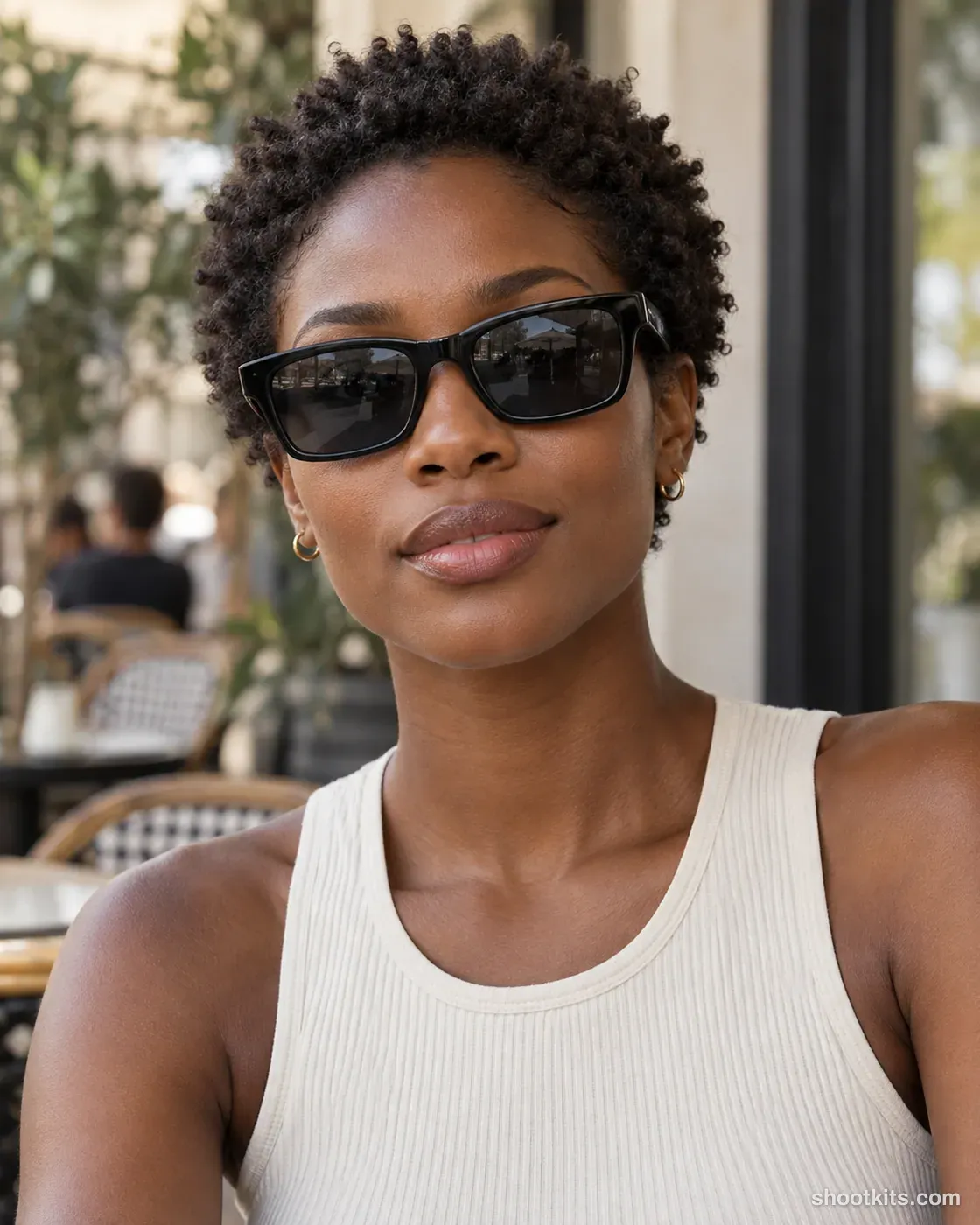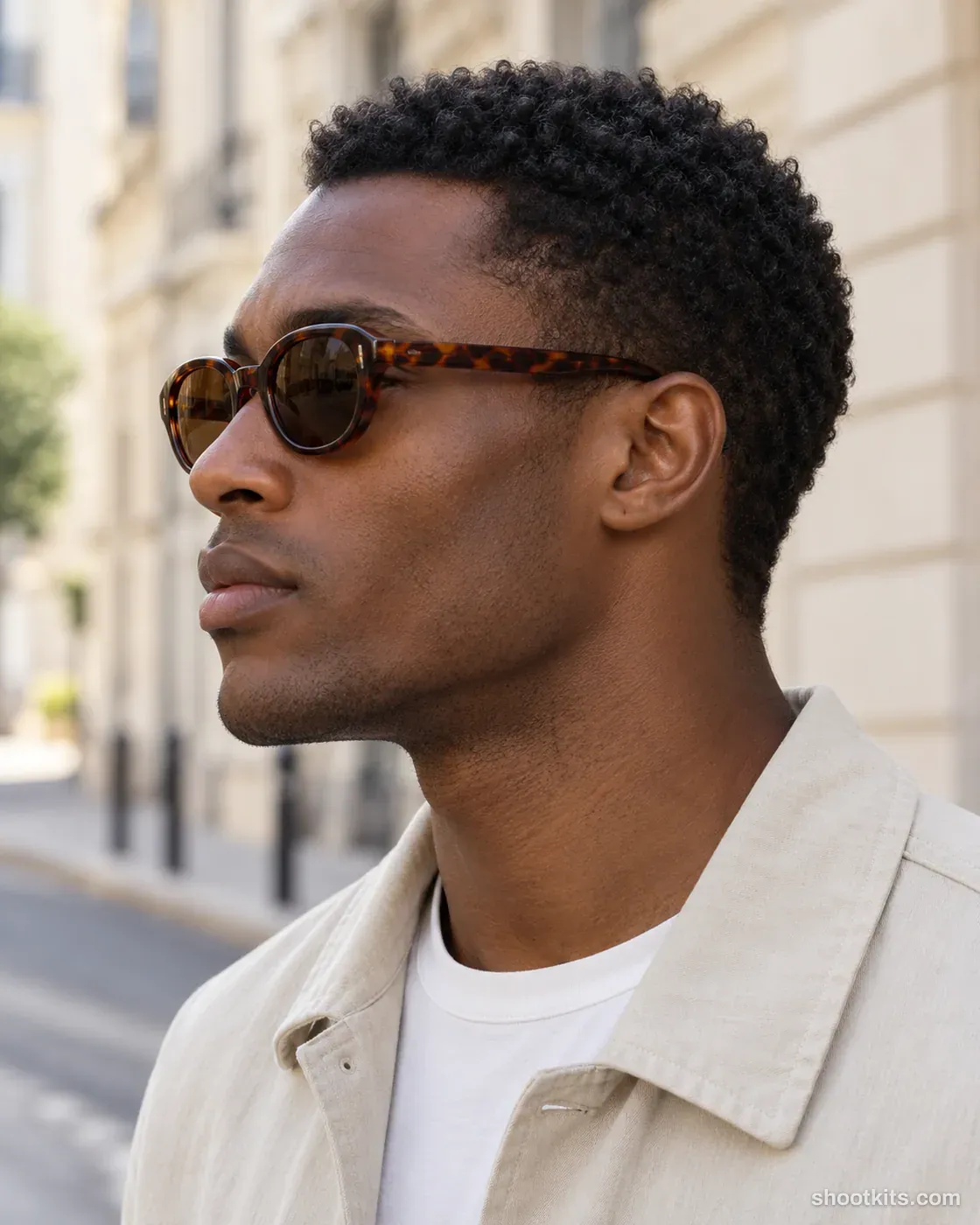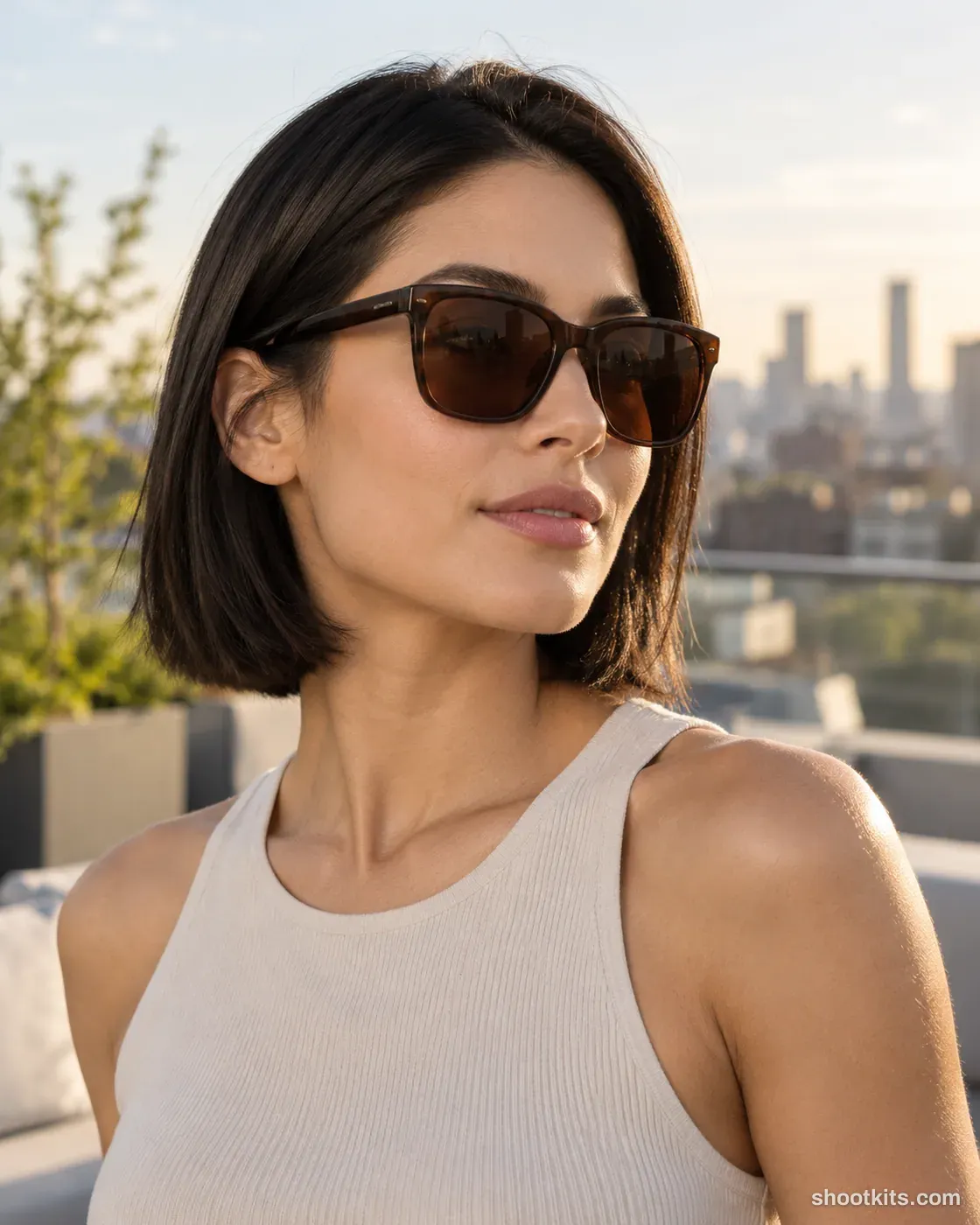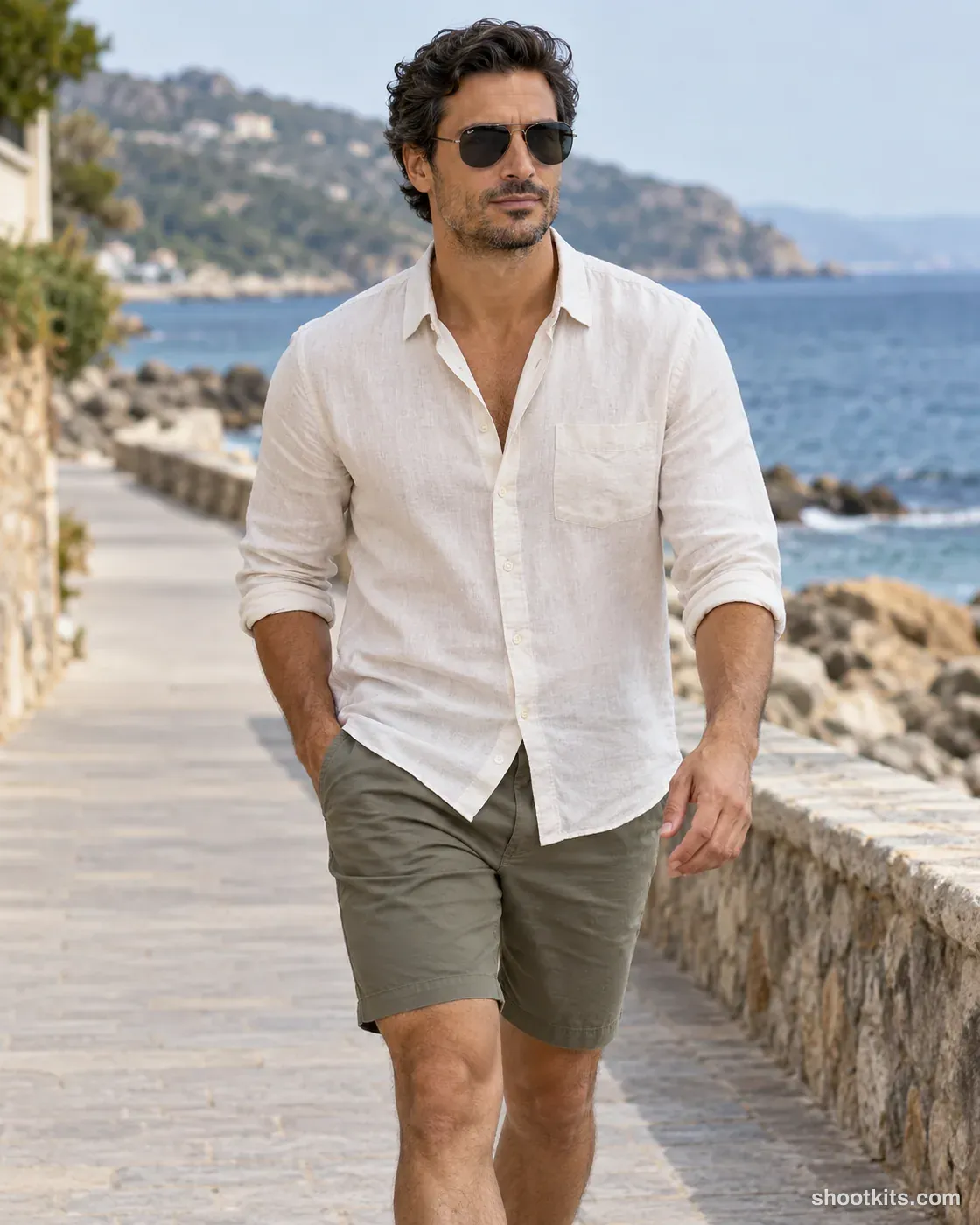
Sunglasses
Temple adjustment
- Single shot
- Model included
- Portrait 4:5
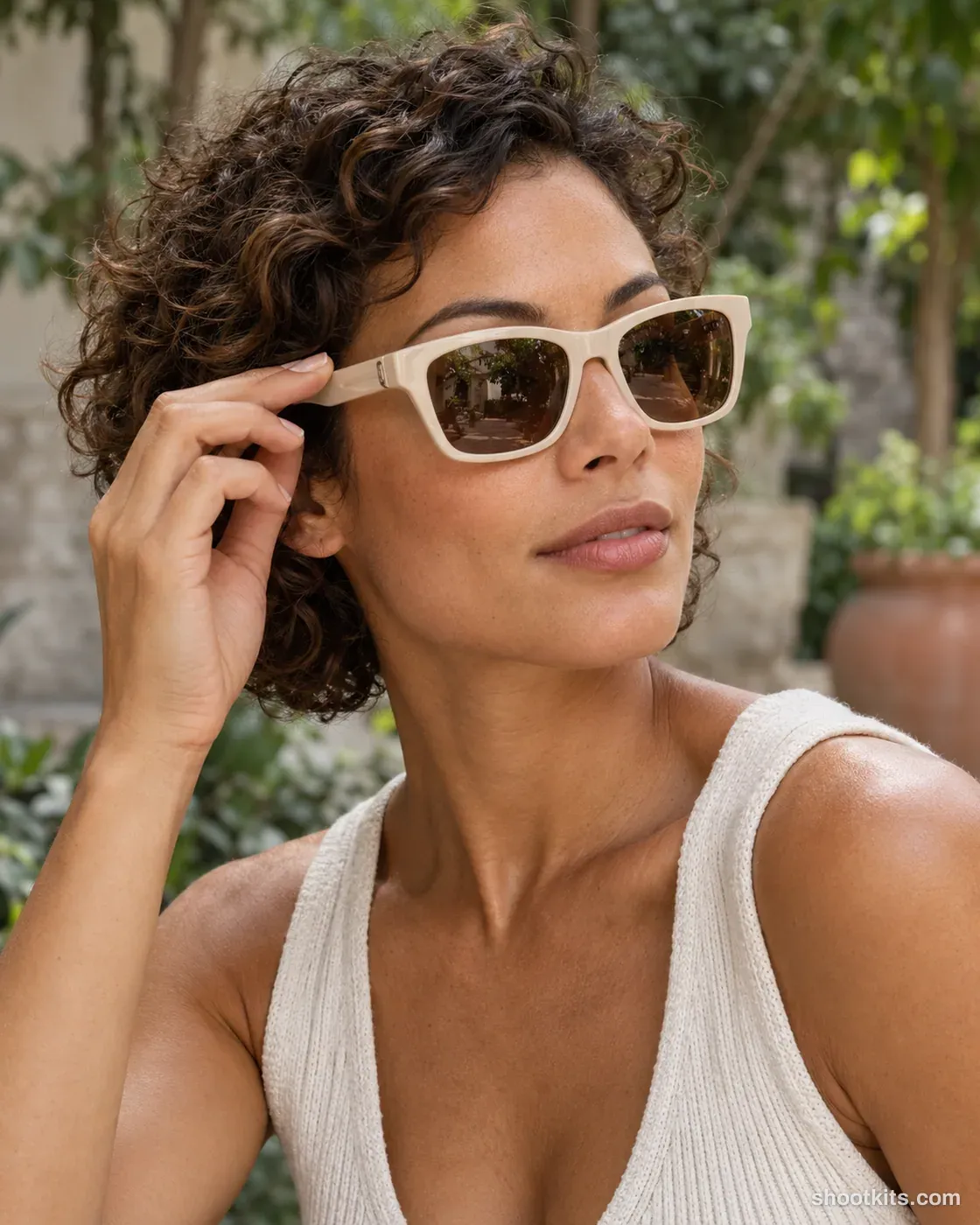
Adjusting a temple gives an eyewear portrait a natural gesture and draws attention to how the frame sits. It is useful for sunglasses with visible side details or a distinctive hinge. In ChatGPT, attach the actual product and describe a light touch to the real temple arm. Check the fingertips, bridge and ear placement, keeping the botanical courtyard soft enough for the glasses to remain the clear subject.
Describe your sunglasses in a few words. Still attach your product photo in ChatGPT.
Create one photorealistic professional fashion or product campaign photograph. Use supplied product reference image(s), if available. Choose an adult model appropriate to the brief; if a model identity reference is supplied, match that person. Models may vary between entries. Use the supplied product as the source of truth for its design, color, cut, fit, material, texture, pattern, construction, hardware and any existing visible branding. Replace the reference model's outfit or accessories with the supplied product as needed; the identity reference does not determine the outfit. Sector: Sunglasses. Hero product: the product shown in the attached product reference(s). Setting: Shaded botanical courtyard. Pose or activity: Touch one temple gently using fingertips without covering the hinge. Camera: Eye-level three-quarter. Framing: Close portrait with hand. Lighting: Soft reflected daylight. Product priority: Show hinge and temple details; realistic fingers and lens reflection. Preserve frame geometry, bridge fit, temple placement and lens tint; reflections must not hide the product. Brand/art direction: Refined, realistic fashion photography. Supporting styling: Minimal supporting styling that complements the supplied product. Composition/aspect ratio: Portrait 4:5. Keep the hero product clearly readable, naturally fitted or held, with realistic scale, folds, contact shadows and anatomy. Use discreet supporting styling only when needed; never obscure or replace the hero product. Render the stated location and lighting coherently. Preserve natural skin and material texture. No invented branding, extra products, duplicated limbs, captions, watermarks or excessive retouching. When a full-body view is requested, include the entire head and feet with breathing room. Keep the chosen model anatomically natural. Vary the model, product, pose, setting, camera and lighting as specified in the brief.
Attach your product photo before you paste the prompt. A plain background and even light give the most accurate result.
How to use this prompt
- Photograph your sunglasses. Use a plain background and soft, even light. A phone photo is fine if it's sharp.
- Open ChatGPT and attach the photo. Use a model that can create images.
- Paste the prompt and send it. You get one finished photo.
- Fix details in the same chat. If something changed, reply with what to keep, for example: “Keep the label exactly as in my photo.”
More tips in How it works.
Questions about this kit
- What does the Temple adjustment prompt create?
- It creates one finished portrait photo (4:5) of your own sunglasses, in this scene: shaded botanical courtyard. The 4:5 shape fits Instagram feed posts and most product pages.
- Do I need to provide a model?
- No. ChatGPT casts an adult model itself. You only upload a photo of your sunglasses.
- Will ChatGPT keep my sunglasses exactly as it is?
- The prompt tells ChatGPT to treat your photo as the source of truth and to protect the frame shape, lens tint, hinges and temple details. If a detail still changes, reply in the same chat: “Keep the frame shape exactly as in my photo.”